
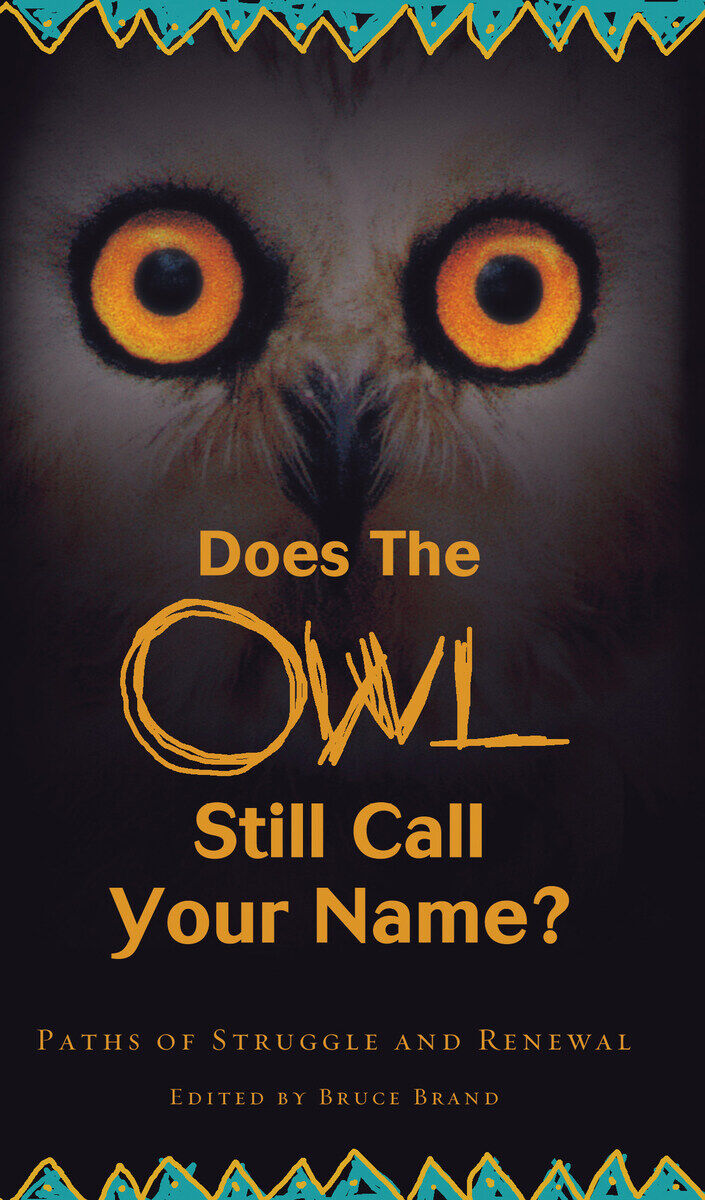
Intertribal Life Ministries is pleased to announce that one of our most popular books, Does the Owl Still Call Your Name? edited by Bruce Brand, is once again available to readers. This book talks about specific struggles Indigenous communities face, as well as giving testimonies and life stories of people who have overcome. We've given you an excerpt from one of the chapters here, and you can order this at https://intertriballife.org/store/.
Arthur Holmes is an Ojibwe Indian from Wisconsin. For thirty-five years he was an alcoholic. Because of drinking, he lost his family, his career as a minister, many jobs, everything he owned and almost his life.
Finally, he went into a treatment center. He came out sober and has stayed that way ever since. After training in addiction counseling, Art worked in several Indigenous alcohol treatment centers.
IL: How great a problem is alcohol among Indigenous people today?
Art Holmes: It is a major problem. It presently affects about 80%* of Native people. They may not all be alcoholics, but they are facing major problems in their homes and communities because of it.
IL: Can you describe the problem a bit more?
Art: About 70% percent of all treatment services given by the Indian Health Service, either directly or through contract services, are alcohol related. About 80% of suicide and suicide attempts are alcohol related, and that is five times the national figure. In about 90% of killings among Indigenous people, either the killer or the victim or both were drunk when it happened. Almost 100% of crimes for which American Indians are put in prison were committed under the influence of alcohol, and 75% of fatal accidents among Native people are alcohol related.
IL: What are some of the side effects of alcohol among Native people?
Art: There is much violence. Among Indigenous people, accidents are the number one cause of death. Homicide is number seven. Suicide is number ten. You can see from this that Indians are dying sudden, unexpected, violent types of deaths.
We are not dying the kinds of deaths the rest of society is dying. The rest of society is dying anticipated deaths: death is coming and they can handle that. Only 20% of them die unexpectedly compared with 80% of Indigenous people. Eight out of ten of our people need help from professionals, but we are not getting it. These problems are all developing out of alcoholism and drug dependency.
Indigenous people use chemicals to relieve the hurt, the pain, the loss they're suffering. And so they drink because it deadens the pain and the misery, the grief, the hate, the bitterness they feel.
IL: How does this affect the family?
Art: Not everyone who drinks is an alcoholic, but many drink to the point that welfare is putting their children in foster homes and orphanages-and this creates another difficult problem. A lot of anger, resentment and bitterness develops over these separations. Kids have a real hatred toward their parents for abandoning them.
When I was working at the treatment centers, I had to deal with this kind of grief and hurt almost daily-separation from parents, attitudes of hatred and hostility toward the welfare services that broke up their homes. Many have hatred and resentment towards the white foster homes. By the time we get them at the treatment centers, they are emotionally starved. And not only this; broken homes mean they miss out on the building of their consciences.
Usually, this is taking place between the ages of eight and twelve. If their values have not been set by their parents or church, then when they reach thirteen, the peer group gets them and sets their values.
IL: Drinking costs money. How does this affect Indigenous people economically?
Art: Eighty percent of Indian people drink too much and they can't afford it. It is a real economic problem and it stops them from maturing. It affects them mentally, emotionally, and spiritually. A problem drinker cannot be depended upon. They cannot take on responsibility and handle it properly.
IL: How is alcohol affecting Native people culturally?
Art: At one time, American Indians did not drink. Now that they have started, their ability to function culturally has dropped below the level necessary to keep the culture going.
Alcohol just wipes out the culture. What usually happens at this point is that the culture will begin to seek some kind of unifying strength to help people fight back, but Indigenous people have not been able to rally from alcoholism. When we sober up one, it seems about three more get hooked on alcohol.
IL: How do you explain the high percentage of Indigenous people who have problems with alcohol?
Art: They are drinking for specific purposes, for emotional help. They are self-medicating with these drugs and alcohol. They are using chemicals to deaden themselves to the pain they feel. Native people are a grieving people, and this bottled-up pain that they don't know how to handle leads to drinking.
IL: Are there programs you would recommend to help the alcoholic?
Art: I heartily recommend AA and treatment centers. The steps of AA will lead a person back to taking responsibility for his or her own problems. They will lead the person into a spiritual experience if those steps are followed correctly. This is what made a Christian out of me. Up to that point I was only religious. I see it doing the same for others. AA opens the door to everyone.
The Alcoholics Anonymous program or something similar can be their surviving strength. Then, they would be able to rise above this threat that is killing them.
From reports of the AA groups, and from the social service people we talk to, there is some success. For instance, one community has seen a remarkable change. Fifteen years ago, when we would walk through the town, about three-quarters of the Indigenous people were drunk or drinking. Now, there are only a few. This is in Minnesota; other states are just beginning to think about treatment centers. Some aren't doing anything.
IL: Does God or the church have a part to play in helping to fight alcoholism?
Art: I would say the church has the answer, or should have it; as long as not everything supernatural has been taken out and it has just become another organization. When the church shuts the door on the Holy Spirit and His work, that church isn't able to help anyone.
IL: What success rate do you see for Indigenous alcoholics who dry out?
Art: About one out of three stays sober. There is a difference between "sober" and "dry." A sober person is one who is in good recovery. He or she is able to take responsibility again and is enjoying life. A person who is dry is filled with all the same compulsion to drink and is just waiting for another chance to get at it.
IL: Why do some centers have a poorer recovery rate than this?
Art: They let people go too soon. The average person takes 72 hours to dry out, but if that person has been drinking for many years, this isn't enough time. In 72 hours he is just about ready for DTs (delirium tremens: tremors and hallucinations experienced by people who are drying out). At the time when he needs help the most, they discharge him.
IL: Can alcoholism be passed on from parents to children?
Art: There is a general rule that what parents do in moderation, children will do in excess. This often holds true for alcohol abuse. Children are also affected in other ways. Babies born to drinking mothers have been born drunk, with liver problems, mental dysfunction, and all sorts of physical deformities.
Alcoholics are much younger than they used to be, on the average about thirty. It starts with those as young as thirteen or younger and goes on up to the elderly.
IL: What advice do you have for the Indigenous alcoholic?
Art: My advice would be to seek out the alcohol counselor in his or her area and take the advice the counselor gives. It is a lot easier to get Native people into treatment now than it was ten years ago. They aren't fighting it like I fought it so long ago. They should also get in touch with local treatment groups like AA or Alcoholics Victorious to get support from others who are going through the same struggles.
IL: What advice do you have for others?
Art: Drugs and alcohol are here to stay. They are affecting our Indian people in the spiritual realm. We need to deal with that spiritual realm on the basis of God in Christ. Our people need to make a personal commitment to Jesus Christ first. This takes care of the sin problem. Then God's power is available to deal with the alcoholism. If we don't deal with drugs and alcohol, they will deal with us.
Then there is grieving. Help Indian people deal with their grief, and most of the reasons for drinking are taken away.
*Current statistics may differ from those presented in this text.