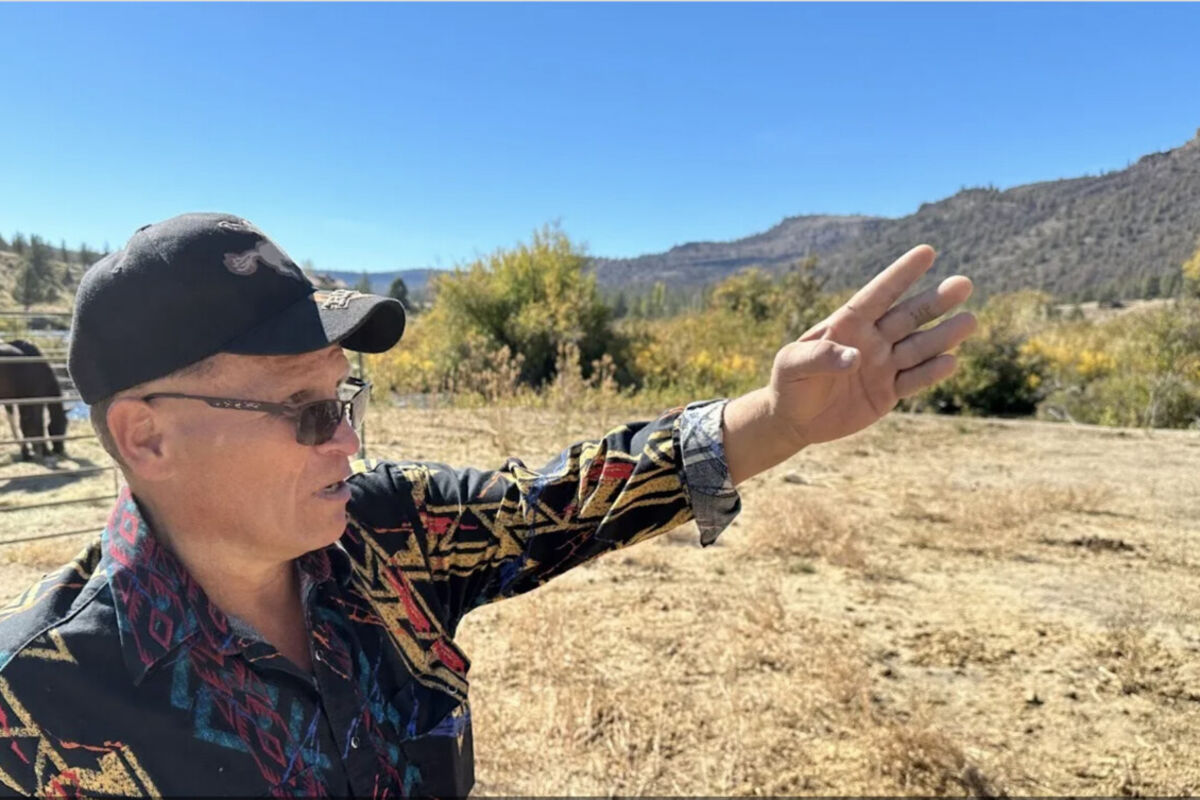

Jason Smith gestures towards the ridge where the Bench Fire rushed up to the outskirts of his ranch. A horse auction was canceled and now Smith and Doust's energies go to feed their ranch animals as well as wild horses out on the expanse of the Warm Springs Reservation.
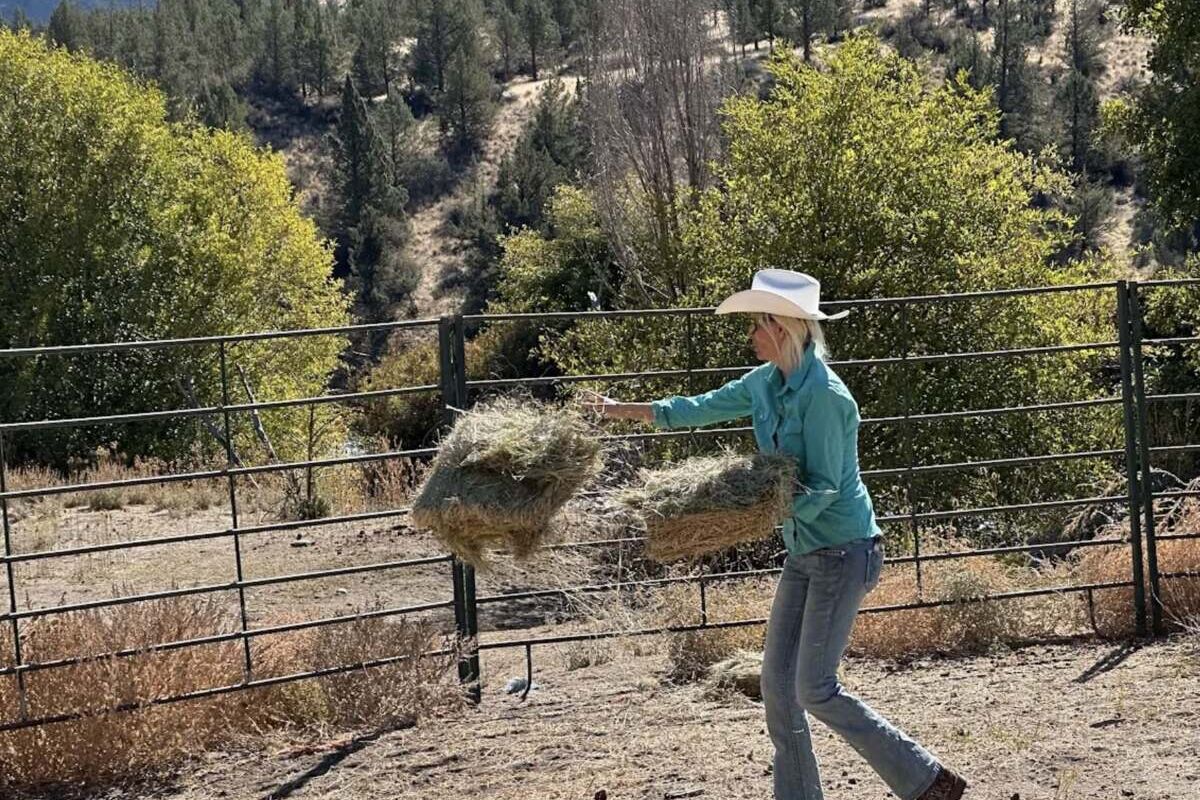
Kremena Doust of the Jason Smith Ranch throws down hay for a small herd of horses that are coming in for a meal and drink.
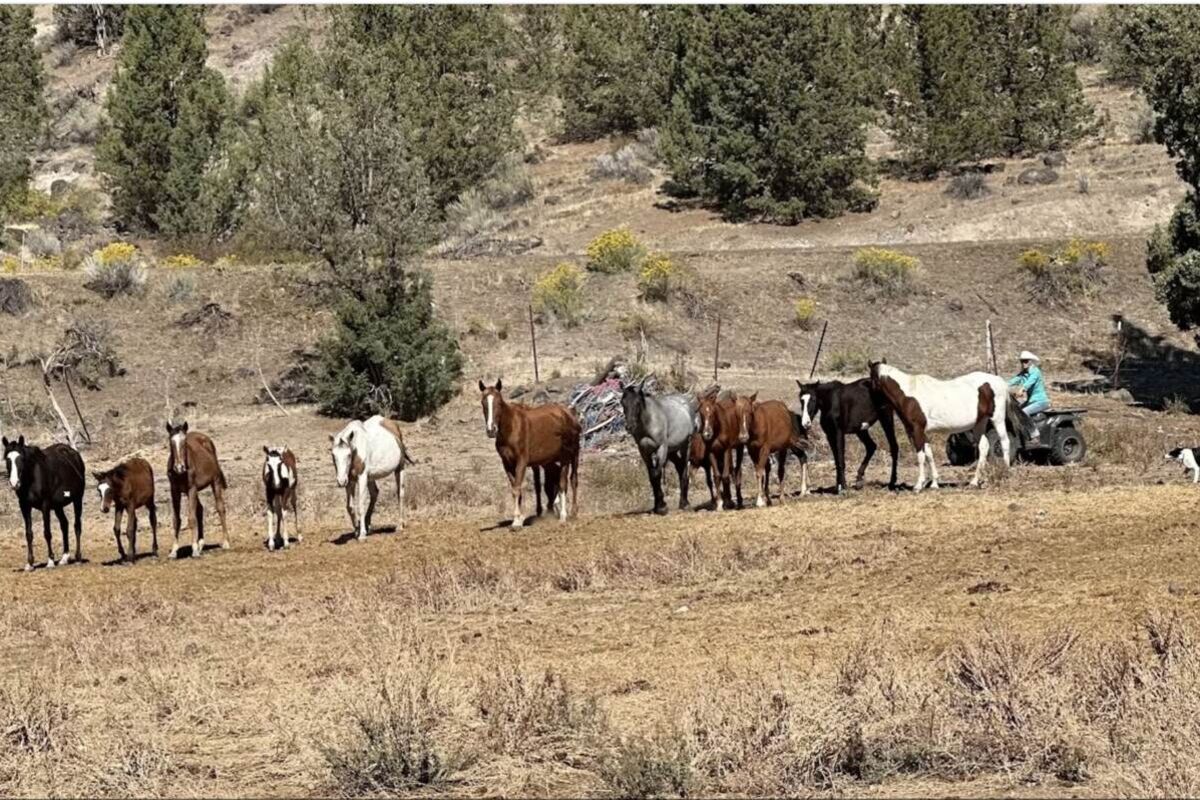
A small herd of horses is nudged towards a pen with freshly-dropped hay by Kremena Doust and Suba the dog. The Jason Smith Ranch is continuing efforts to feed its horses and livestock after the Bench Fire roared through much of their grazing area.
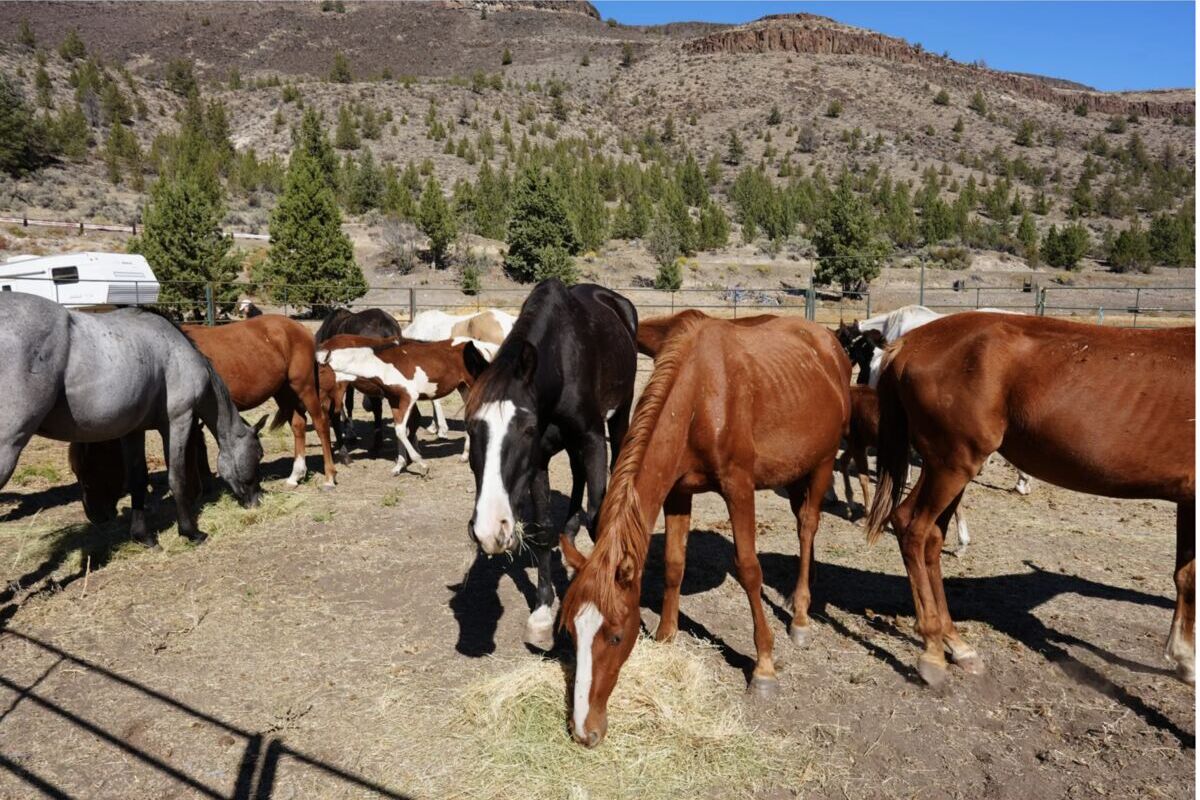
Horses feed on hay at the Jason Smith Ranch. The animals also drink from the Deschutes River which flows by the ranch.
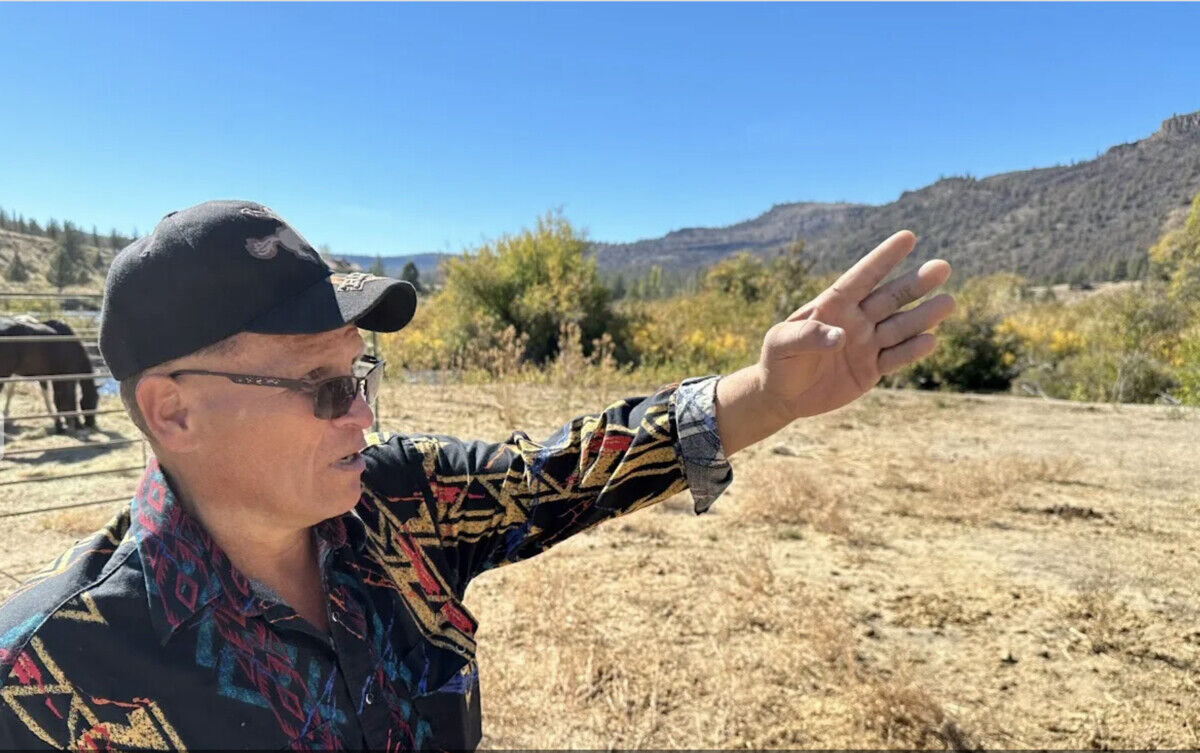
Jason Smith gestures towards the ridge where the Bench Fire rushed up to the outskirts of his ranch. A horse auction was canceled and now Smith and Doust's energies go to feed their ranch animals as well as wild horses out on the expanse of the Warm Springs Reservation.
WARM SPRINGS RESERVATION, Ore.-On a sunny and calm afternoon in late September, Jason Smith pointed towards a high ridge circling his namesake ranch, towards a section of rocks that still bears the char of the Bench Fire. The wildfire roared through 67,000 acres on the Warm Springs reservation during the summer, including the edge of his home and corrals.
"You could see up there where the fire reached," said Smith, squinting in the afternoon glare. "You could see the grazing areas for the horses, how it's still somewhat yellow-green. Pretty much stopped right here."
Smith, a Wasco citizen of the Confederated Tribes of Warm Springs, and his partner, Kremena Doust, remain grateful that the fire didn't come any further. Ignited on July 23, the Bench Fire was 90% contained in mid-October, and is largely of little concern as the weather is becoming colder and damper.
"We graze most of our working horses year round there," continued Smith. "So there wasn't as much fuel, and it helped. It kind of helped save the properties here, you know."
At the same time, Smith and Doust figure at least 80% of their grazing district, where he's kept between 400 and 500 wild horses and roughly 150 cattle, was lost to the flames, and they've been asking for help in either getting feed, hay and grain for their animals, or adopting out horses.
"We're surviving," said Smith. "We're struggling, but we're making it."
The two had planned on a July 25 in-person auction for nearly 70 wild horses, but cancelled it when they realized the danger of the fire.
"Nobody really didn't realize how bad it was until the day of the sale," recalled Smith. "It ran like 14 miles in one day, from our westerly range where we run our cattle and horses, clear to our front door here."
Since August, Smith and Doust have adopted out 47 of their horses. On Oct. 12, they launched the First Nations Online Horse Market, where they hope to find homes for 25 more. Doust also has filed paperwork to form a nonprofit to be called the Wild Horse Legacy Foundation. Once approved by the IRS, she said its purpose will be to rehabilitate and rehome wild horses.
Caring for the herd with pluck and persistence
Doust told Underscore Native News that in the last few months, the Jason Smith Ranch has also contended with mechanical troubles.
"No tractor was working. The truck was breaking. At some point we couldn't even go and get hay because the equipment is quite old," said Doust. She turned to Smith. "Which year is your tractor? '69?"
"The backhoe's a '69, and the tractor is like a '78," replied Smith. He said there's been constant maintenance that he's learned to do himself, to help save money.
"That was one of my handicaps. I was always a cowboy, never a mechanic."
Smith did work for more than 20 years as the range and agricultural program manager for the Confederated Tribes of Warm Springs. He retired from that job five years ago, to focus on his livestock and horses.
"Ever since I committed full time to my ranch, it makes me wonder how I ever had time to work," he laughed. "Because there's always something to do."
The pair conducts their business in stride, and seem to have each other's back in spite of all the challenges. Their roads remain coarse from all the firefighting traffic that crisscrossed their land during Bench Fire suppression efforts, but beyond two horses put down right after the fire, they've managed to keep their herd cared for and tended to.
"It is soothing to be here," said Doust. "And healing for the horses, too."
As Doust throws down several bales of hay inside a fenced-in pen, a herd of roughly a dozen horses make their way across a rural highway towards her. She hops on a 4×4 and circles around the horses, gently coaxing them towards the pen.
"They got a pecking order and they darn sure let each other know who's the boss," said Smith, as the horses arranged themselves into a loose line. "So they can kind of scuff up themselves a little bit."
As the horses feed, Doust motions towards the Deschutes River which slowly courses by, its waters roaring through rock and broken timber. The scene is rustic and serene, a much-needed respite from the chaos caused by the summer fires.
"It's great to see them run, and see them advance also in their recovering," Doust said. "There is fresh water here. They can drink straight from the river. They form their friendships and they walk together."
Smith shifts the conversation towards one horse that got left behind after a mysterious injury. A short while after the Bench Fire, the couple was driving out to the farther parts of the range with bales of hay. A blue roan that had been with four other young studs the week before was suddenly by himself.
"And he's just standing there," said Smith. "Then finally, he moved, and he was lame. They'd run off and left him all by himself. Either he got hit on the highway, or he got caught in some old barbed wire or something. He could hardly move."
The two ranchers threw him some hay, and found the horse in the exact same spot the next day. So they set up a small station for water and food, to keep him from having to travel.
"That's what he needed, [to be] stationary so he could heal," said Smith.
Doust said at its worst, the horse's leg was swollen and dislocated. Efforts to reach a veterinarian were fruitless, and even then the couple suspected they'd recommend euthanasia, which is standard for such injuries. "And we looked at this horse, and he wanted to live."
The horse still has a slight limp, but is recovering well and is now keeping up with the others in the herd.
With the winter approaching and a few hundred horses left roaming the range, Smith and Doust hope to continue receiving donations for feed, as it's uncertain if there'll be enough rain and moisture to create a significant "green out" in grazing areas in the weeks ahead.
Doust has been sharing reels of their recovery efforts, and highlighting various mares, yearlings and studs. She says the Jason Smith Ranch and its animals have about 120,000 followers across all social media platforms, many from across the world.
"We get messages in different languages, and our stories seem to resonate with them. It's been beautiful to feel that connection, and spread the love of these reservation horses across the world."
Reprinted from Underscore Native News, this work is licensed under a Creative Commons Attribution-NoDerivatives 4.0 International License.