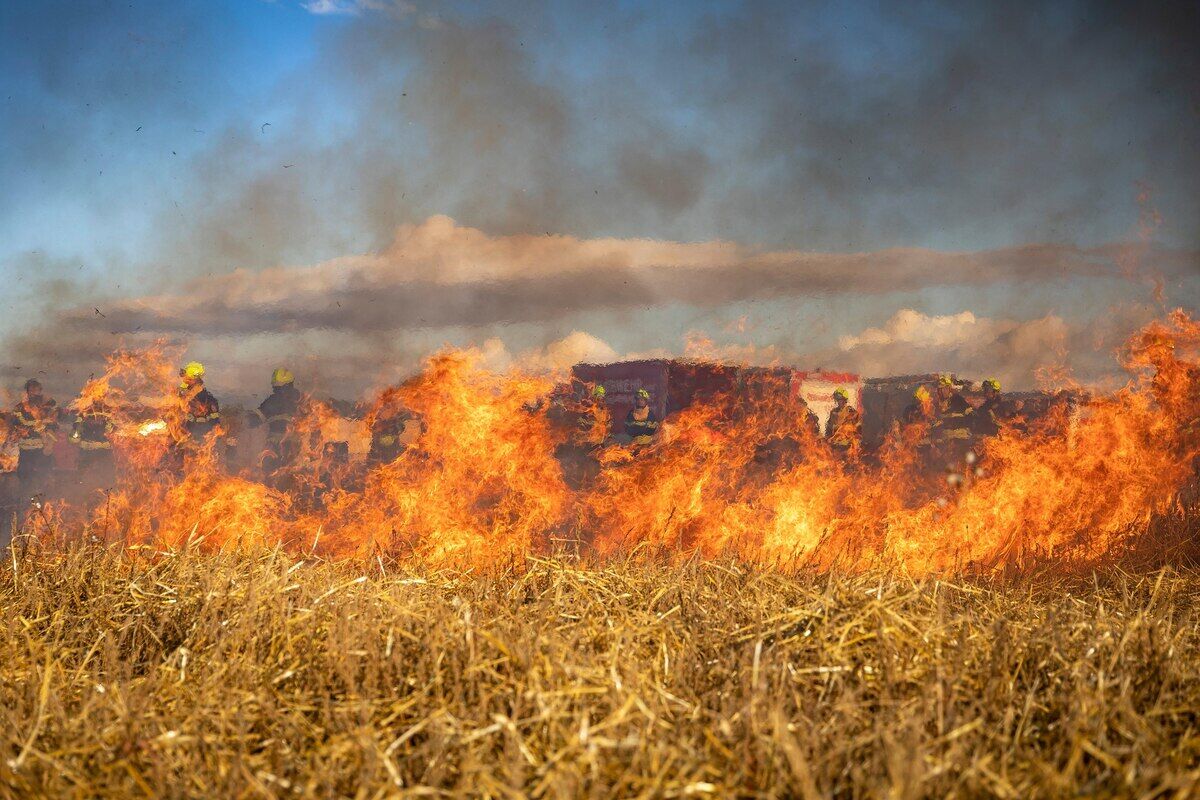
YORKTON, Sask.—The Canadian federal government recently announced that the Yorkton Tribal Council (YTC) will receive $335,000 to train 35 more wildland firefighters to join their existing crew of 60. Some of the funding will also go for equipment.
The council represents six First Nations in the Yorkton area-the Key, Cote, Keeseekoose, Ocean Man, Zagime, and Kahkawistahaw nations' territory spans roughly 52,000 hectares.
The program is designed to blend modern firefighting techniques with Indigenous cultural burning practices, which will result in low, controlled fires that clear away brush and reduce fuel for larger wildfires. Cultural burning has been used by Indigenous people for centuries to protect lands, encourage regrowth, and reduce fire risks. The training will involve elders and youth working together. The funding comes as Saskatchewan has faced one of the worst wildfire seasons on record, with more homes and structures lost this year than any other year.
However, the funding is long overdue, Bonnie Austman, the council's emergency management coordinator, said in an interview on Tuesday.
"Our firefighters on First Nations don't get a whole lot of funding. With this, we'll be able to train 35 firefighters and incorporate cultural and traditional burning practices we've been missing for many, many years," Bonnie Austman, the council's emergency management coordinator told CBC News.
Austman noted that unlike cities and municipalities, First Nations often don't receive financial support to fight wildfires unless they go through the lengthy process of applying for grants or funding proposals.
Federal officials said the Yorkton investment is part of a broader plan to train 2,800 new wildland firefighters across Canada by 2028. That's up from an original target to train more than 1,000 community members.
The money is part of the government's $28-million Fighting and Managing Wildfires in a Changing Climate Program (FMWCC) Training Fund which aims to train new, community-based wildland firefighters by 2028, focusing on Indigenous communities, to increase local fire management capacities and capabilities across Canada.